Nice to know
In an increasingly digital world, attention may be easier to generate, but it is also becoming more fleeting. A banner disappears, a post gets scrolled past, a spot plays through – and then it is gone.
This is exactly where promotional products show their strength: they are touched, used, worn. And they stay. That is why they work. Real brand impact happens when people physically experience something.
The principle behind this is called multisensory marketing.
Several senses are engaged at the same time: sight, touch, use, hearing, and sometimes even smell and taste. This combination ensures that information is not just briefly perceived, but processed more deeply in the brain and stored for the long term.
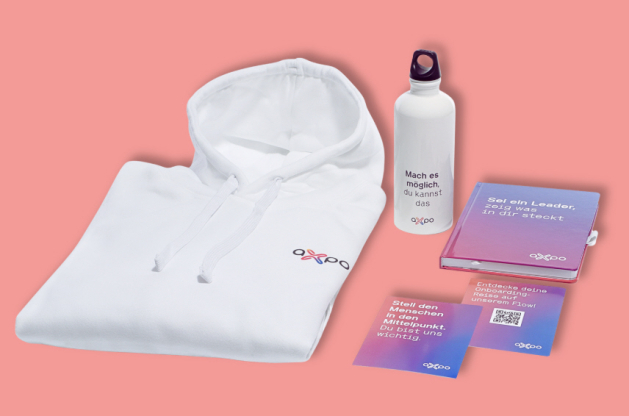
A promotional product is therefore much more than a simple giveaway. It is a brand experience.
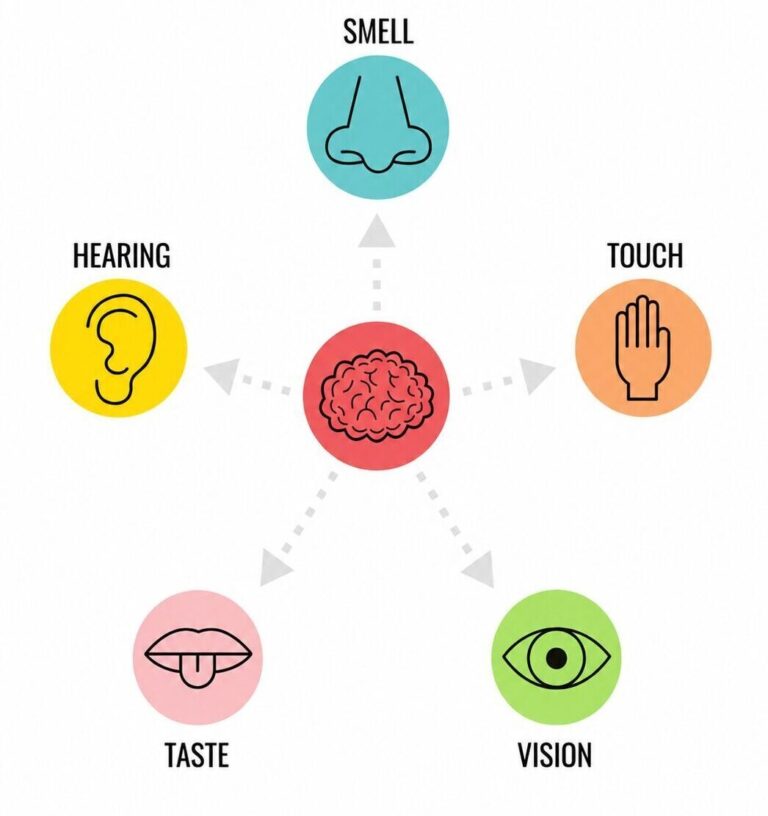
Promotional products do not create impact by chance. They work through the targeted interaction of several sensory impressions:
The rule is simple: the more senses are involved, the more stable the memory becomes, and the longer a brand remains present with the target audience. Our brain stores combined impressions more strongly than purely visual stimuli. A good promotional product therefore does not address just one channel. It amplifies brand impact across several levels at the same time.
Modern brand management is no longer based solely on visibility, but on the quality of the experience. The more strongly a brand is anchored in everyday life, the more relevant it becomes.
Promotional products make exactly this kind of integration possible: they sit on desks, accompany people on the go, and are used regularly.
The key difference compared with many other forms of advertising lies in the context of use. A promotional product does not appear between two pieces of content. It performs a function itself. It writes, warms, charges, protects, carries, organizes, and more. As a result, the brand is not perceived as an interruption, but as part of a solution.
Implicit perception is crucial here: users do not always actively engage with the advertising, but they still notice the brand regularly. This casual presence is especially valuable because it works without pressure. The brand does not have to push loudly into the foreground. It stays present through genuine usefulness. It is precisely this quiet repetition that creates closeness, and closeness creates trust.
Promotional products are among the few marketing tools whose effectiveness has been clearly proven.
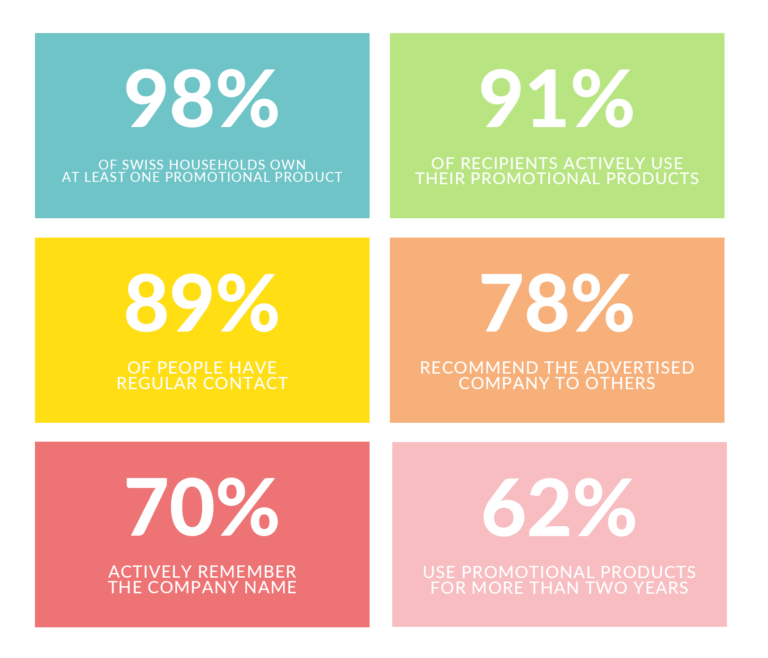
Swiss market data* is impressive and highlights one key takeaway: promotional products combine reach with real-world use. They are not only seen – they become a genuine part of everyday life. As a result, their impact cannot be explained by impressions alone. What matters is not just how many people a promotional product reaches, but also how often, how long, and at what moments people interact with it.
This results in an exceptionally low Cost per Contact: a one-time investment generates repeated brand interactions throughout the product’s lifetime. Even better, those interactions don’t have to be purchased again. The promotional product keeps working for the brand – on a desk, in a bag, in the meeting room, or on the go.
* Source: Werbewirkung von Werbeartikeln, DIMA Marktforschung on behalf of PromoSwiss, 2025
Classic campaigns fade after a short time. Promotional products, on the other hand, unfold their impact over months and years. Every use creates another brand contact, without any additional effort.
This effect is particularly strong when an item finds a fixed place in everyday life. A favorite mug on the desk, a notebook in a meeting, an umbrella on the commute, or a water bottle during training are not perceived as classic advertising. They simply belong. That is exactly where the psychological advantage comes from: what is used regularly feels familiar. And what feels familiar often has an easier time during purchase decisions.
There is also natural pass-along visibility: a pen changes desks, a bag is seen in public spaces, a water bottle accompanies the day. This creates contacts that are not planned, but are still valuable. The product expands its reach through visibility, use, and movement, without any additional campaign booking.
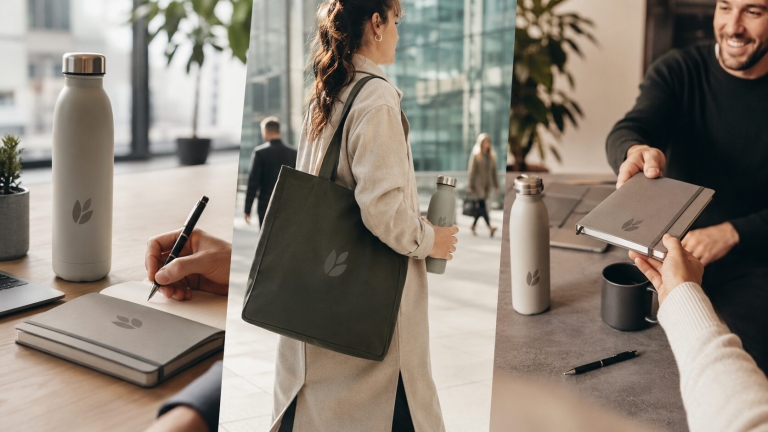
Promotional products carry more than a message. They convey appreciation. And this perception influences the relationship between a brand and its target audience more strongly than any ad.
78% of recipients recommend the company. Some even state that the promotional product influenced their purchase decision. A useful item becomes a real decision impulse – subtle, but effective.
The perceived value is crucial here. A cheap item that does not fit the brand or the target audience can even cause damage. The unit price alone is not what matters. Fit is what counts: Does the item fit the occasion? Does it fit the target audience? Does it fit the brand? A well-chosen promotional product does not feel random. It feels thoughtful. That is exactly how appreciation is created.
This is a major difference from classic advertising. An ad says: «Look at me». A good promotional product says: «I am useful to you». This shift noticeably changes how the brand is perceived.
Companies today are under pressure to act responsibly and to make that responsibility visible. Promotional products offer major opportunities here, but also real risks.
Products with a short life span or little practical use quickly become counterproductive. They end up in the trash and harm brand perception. High-quality, durable items, on the other hand, strengthen the brand credibly while also meeting ecological expectations.
The decisive factor is therefore not only the material, but the entire life cycle: How long will a product be used? Can it be repaired, reused, or meaningfully recycled? Is the packaging appropriate? And does the production fit the brand’s message? A promotional product is only credible when material, use, quality, and communication work together.
Promotional products that are used for years automatically make a better ecological contribution than short-lived alternatives. Sustainability is therefore no longer an added argument. It is part of the purchase decision and part of brand perception.
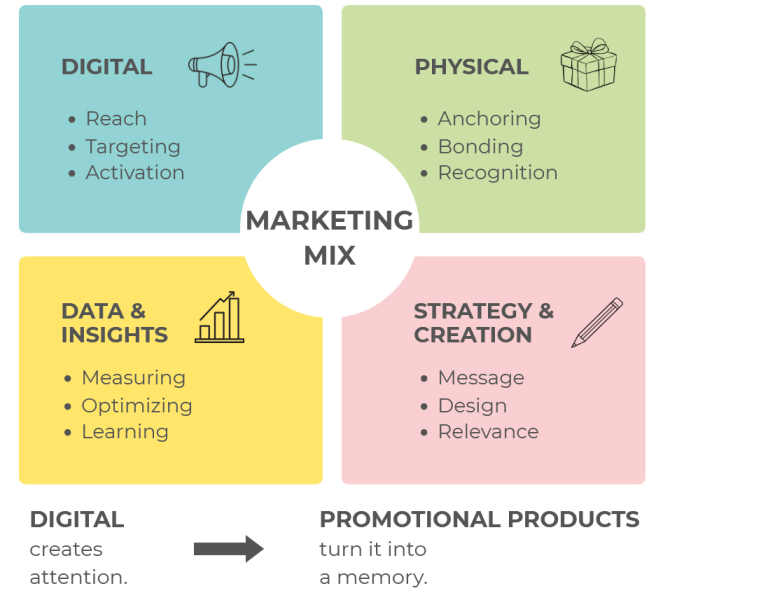
The greatest impact does not come from an either-or approach, but from the marketing mix, the targeted interaction of digital and physical measures along the entire customer journey.
Digital channels create reach, precise targeting, and fast activation. Promotional products create anchoring, emotional connection, and recognition.
Put another way: digital creates attention. Promotional products turn that attention into memory.
This combination becomes especially effective when both channels are aligned. An online contest with a high-quality giveaway, a mailing with a useful promotional product, or an event where guests receive a durable gift extends brand contact far beyond the actual campaign moment.
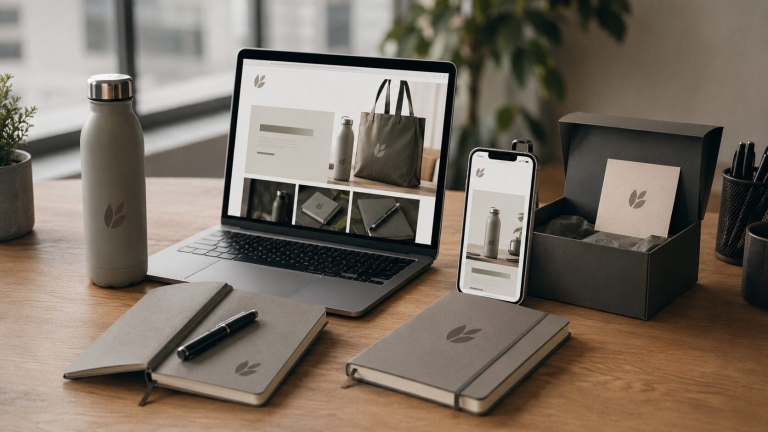
The mix becomes truly powerful when the physical item triggers or continues a digital action. A QR code on the packaging, a personalized mailing, a campaign landing page, or a follow-up after an event turns a single touchpoint into a connected brand experience. This means the promotional product is not a detached gift, but an active part of the customer journey.
Companies that strategically integrate physical promotional media into campaigns strengthen the impact of digital touchpoints, measurably and sustainably. Strong brands use exactly that.
In the end, visibility alone is not what counts. Memory is. Promotional products achieve a recall rate of 70%. With high-quality and relevant items, this can rise to as much as 100%.
By comparison, classic media perform significantly weaker:
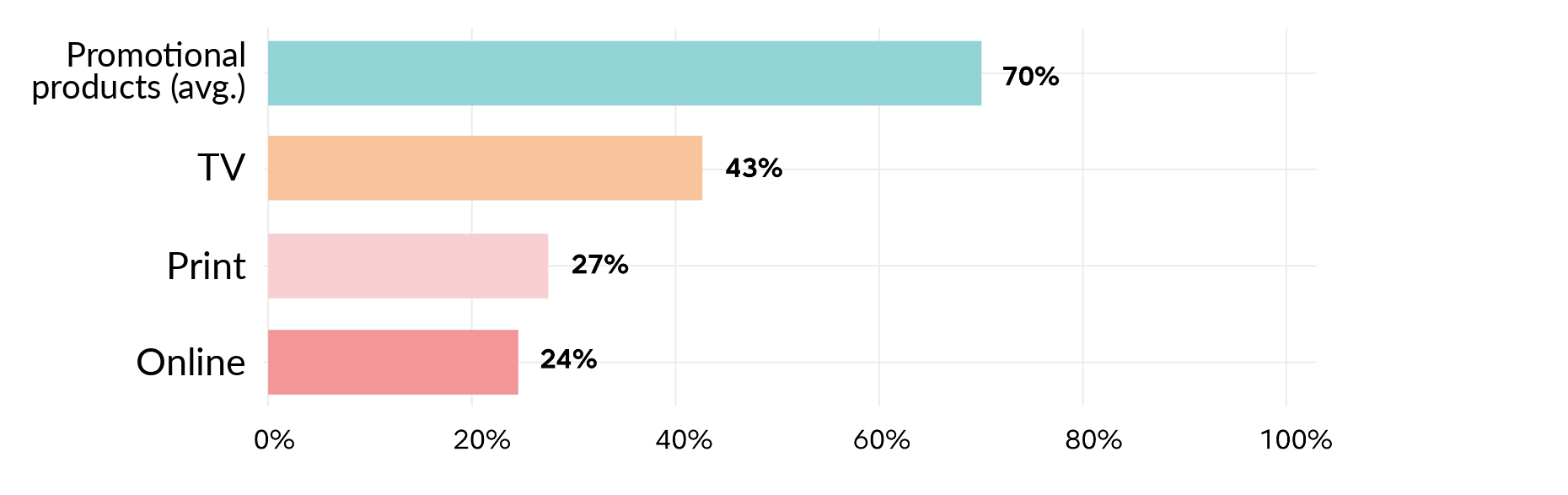
The reason for this advantage lies in the combination of use, repetition, and multisensory perception. Information is not only seen. It is experienced, felt, and used. That is exactly what anchors it more deeply and for longer in memory.
Quality plays a central role here: the more useful and higher quality an item is, the stronger its effect on recall and brand perception. Cheap goods rarely create real brand loyalty. In the worst case, what stays in the mind is not a positive impression of the brand, but disappointment with a product that breaks quickly, feels unpleasant, or offers no real value.
Promotional products are among the few marketing tools that are not only seen but actively experienced. Through the interaction of haptics, design, and function, they create an effect that classic advertising can hardly achieve.
They create familiarity, strengthen trust, generate organic reach, and ensure exceptionally strong brand impact, with a Cost per Contact that is hardly comparable to any other medium.
Companies that use this effect strategically, with the right product, the right quality, and the right moment, create more than visibility. They create real anchoring. The promotional product works consistently, subtly, and close to everyday life. Not louder, but more relevant.