Nice to know
Screen printing is one of the best-known decoration methods for promotional products and textiles. The process uses a fine-mesh screen to transfer ink directly onto the surface of a product.
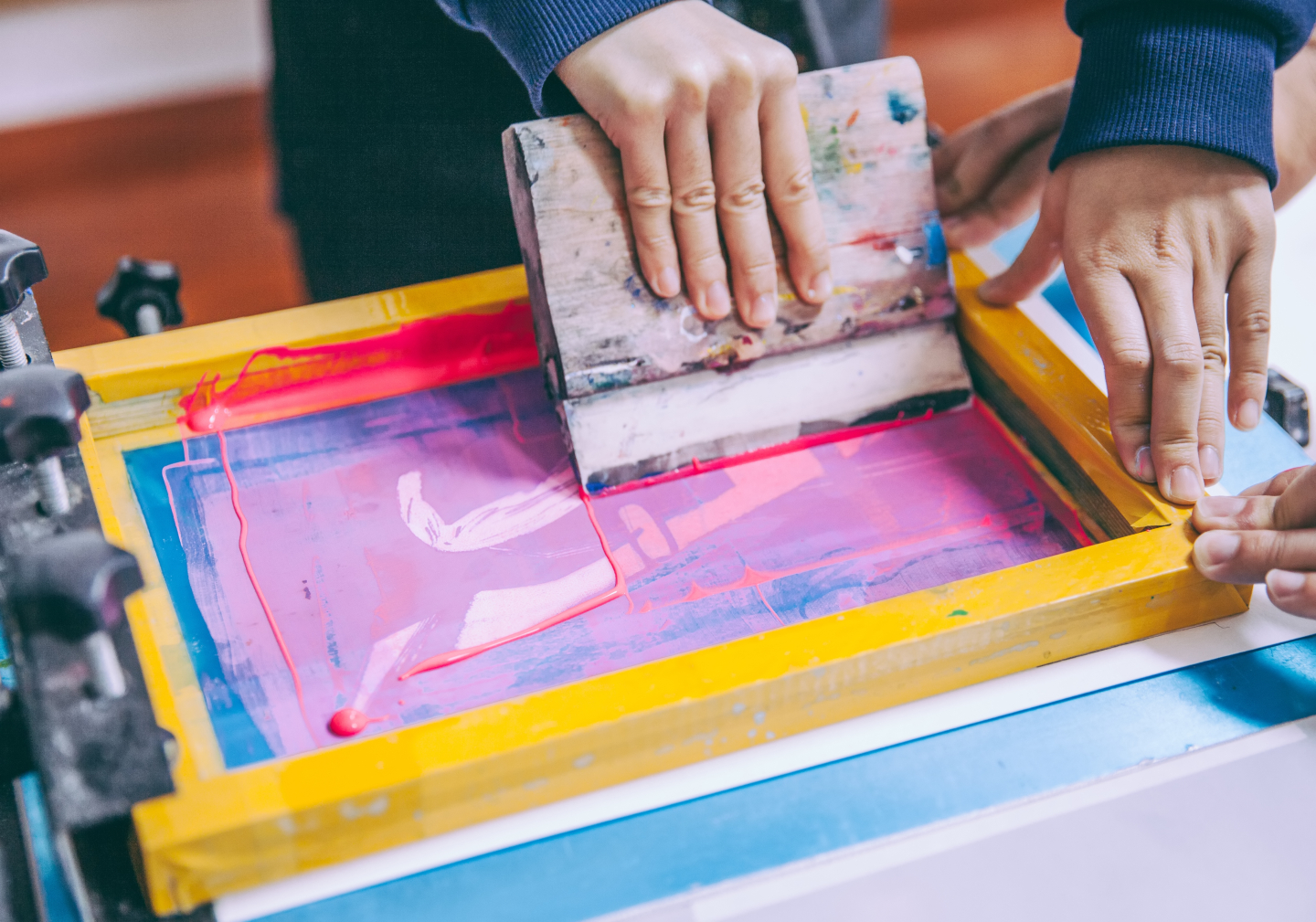
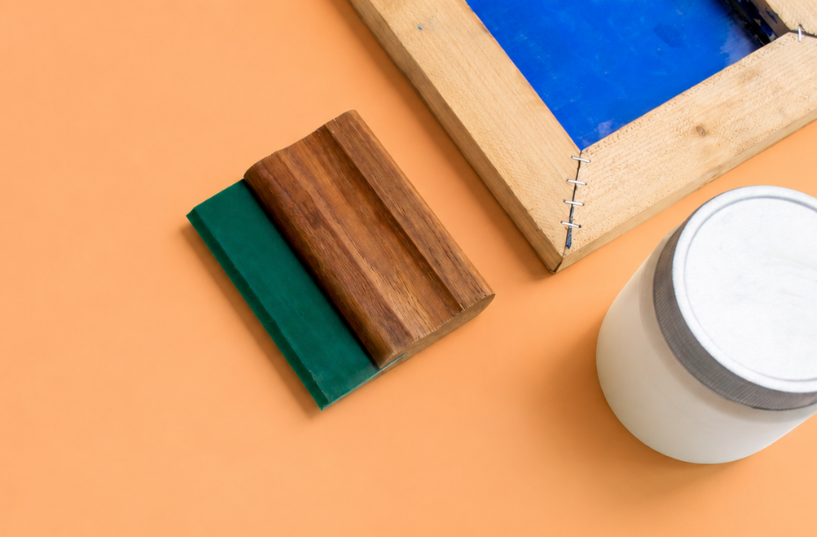
The screen consists of a fine mesh, usually made of polyester, stretched over a frame. During the printing process, a squeegee is used to pull the ink across the screen and push it through the open areas of the mesh onto the product surface. After printing, the ink is dried or cured, depending on the ink system used. This permanently fixes the print to the respective material.
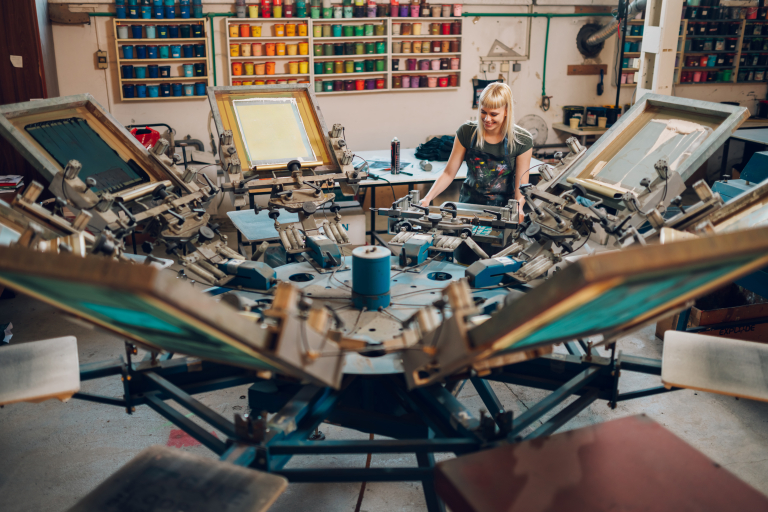
The number of available print colors depends on the screen printing machine being used. Larger screen printing carousels can print up to six colors and are common today. There are also machines that only allow for one-color prints.
For textiles, six-color screen printing carousels are very commonly used. For writing instruments, one- or two-color machines are more typical, often for both technical and cost-efficiency reasons.
A separate screen must be prepared for each print color, which involves a certain amount of setup work. As a result, costs increase with the number of colors used – partly because of the setup and screen preparation charges and partly because the actual printing process requires more time and ink. For multicolor designs, screen printing is particularly well suited to larger quantities.
What factors affect the cost of screen printing?
Different screen printing methods are used depending on the product, its shape, and its material. Textiles and bags are decorated using textile screen printing, while flat screen printing is suitable for flat products. For round products such as water bottles or writing instruments, rotary screen printing is used. With rotary screen printing, the product rotates while the ink is applied, allowing the logo to be printed around the product.
Screen printing is ideal for bold, vibrant colors and offers many ways to bring your logo or design to life.
Screen printing delivers high print quality, vibrant colors, and excellent opacity. On textiles in particular, screen printing provides a durable, wash-resistant finish.
Do you have a clean logo with just a few colors and need a larger quantity? Then screen printing is a great choice. For photographic images, gradients, or designs with many different colors, digital printing is often the better solution. Gradients can be reproduced with screen printing, but because of the screen-printing halftone process, they cannot be rendered as finely as they can with digital printing.
| Screen printing | Digital printing | Pad printing | |
|---|---|---|---|
| Few colors | ★★★ | ★ | ★★★ |
| Many colors | ★★ | ★★★ | ★★ |
| Color gradients / Multicolor designs | ★ | ★★★ | × |
| Large quantities | ★★★ | ★★ | ★★★ |
| Pantone color matching | ★★★ | × | ★★★ |
| Durability | ★★★ | ★★ | ★★ |
| Irregular surfaces * |
★
* except rotary screen printing
|
★
* except rotary digital printing
|
★★★ |
One of the biggest strengths of screen printing is its versatility.
Promotional products with screen printing are often seen on textiles, but many promotional products made from plastic, paper, cardboard, wood, glass, or metal can also be decorated using screen printing.
Whether screen printing is possible on a particular product depends on more than just the material. The product’s shape, surface, and available print area also determine which printing technique is best suited to the application.
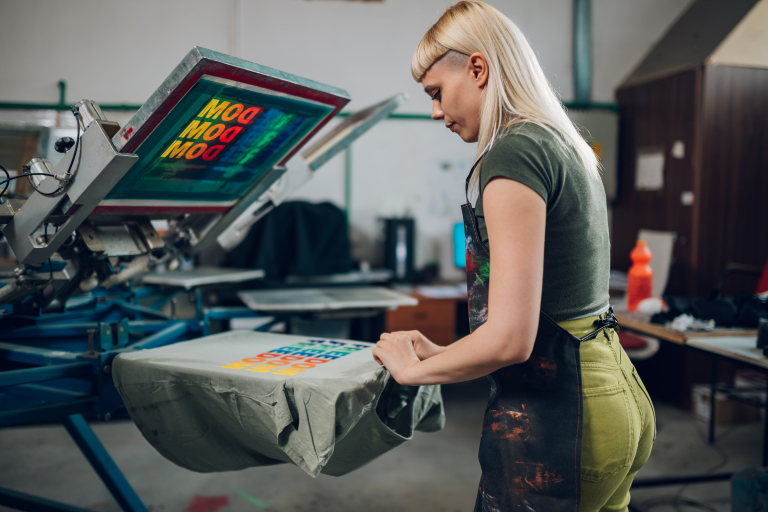
Screen printing is particularly well suited to larger quantities, clean designs with just a few colors, and products that require strong opacity and durable decoration. The printing process can be used on a wide variety of products.
Typical promotional products for screen printing include textiles (such as T-shirts, polo shirts, caps, cotton bags, etc.), umbrellas, water bottles, notebooks, and various accessories. These products are well suited because they generally offer sufficiently large and easily accessible print areas, and the ink adheres well to the material.
Clean lines, rich colors, and an even print are hallmarks of screen printing. Logos, lettering, and graphics with clearly defined color areas, without color overlaps or strong gradients, can be reproduced with precision and a high-quality finish. Thanks to its excellent opacity, screen printing also produces impressive results on many dark or colored products.
Another advantage is the ability to reproduce specific Pantone colors. This means corporate colors can be matched as accurately as possible – an important factor for maintaining a consistent brand identity across different promotional products.
One aspect we left out above for the sake of simplicity is explained in more detail here: screen preparation. First, a separate film is created for each print color. You can think of a film as a transparent sheet on which the respective print design is printed in an opaque form. Once the films have been created, the screens can be prepared. The screen is coated with a light-sensitive emulsion. The film is then positioned on the prepared screen. Next, the screen is placed in an exposure unit, where it is exposed to UV light. Here is where the process gets interesting: the emulsion hardens everywhere the UV light reaches the screen.
This does not happen in the areas covered by the opaque design on the film. The screen is then washed out with water, dissolving the uncured emulsion and leaving open areas in the mesh that form the desired design. During the subsequent printing process, ink passes through these open areas and transfers the desired design onto the product.
Not sure whether screen printing is the right decoration method for your promotional product?
We’ll be happy to advise you and find the printing technique that best suits your design, product and quantity.
We take your individual requirements into account and show you which options are available for your project.
➤ Get expert advice now
➤ Explore promotional products